LA Ink Tattoo Design

Wednesday, February 27, 2013

Apparently This Matters: Face tattoos


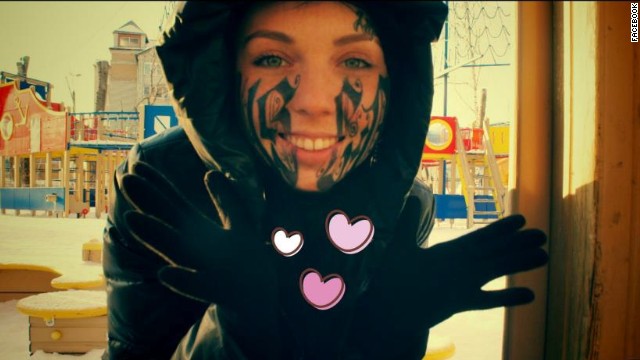
Lesya Toumaniantz reportedly had her husband-to-be tattoo his name on her face about 24 hours after they met.
 Toumaniantz reportedly had her husband-to-be tattoo his name on her face about 24 hours after they met.
STORY HIGHLIGHTS
  • "Apparently This Matters" is CNN Tech's weekly, offbeat look at stories trending online
  • This week, Jarrett Bellini looks at a woman whose fiance' tattooed his name on her face
  • While piercings have become accepted, the face tattoo remains rare and shocking
  • Get one big enough though, and your parents might just stay quiet and take a cruise
Editor's note: Each week in "Apparently This Matters," CNN'sJarrett Bellini applies his warped sensibilities to trending topics in social media and random items of interest on the Web.
(CNN) -- When I was young, I remember that encountering an individual with a nose piercing seemed to mean something. Specifically: This person kills puppies.
Of course, nose piercings never actually meant anything. It was (and is) just body art.
That said, baseless conclusions used to come easy. Back then, it was rather unusual to see a person who'd willingly popped a fresh hole in his or her face when that face was doing just fine with the ones that came punched out from the factory.
\
"Apparently This Matters" Is Jarrett Bellini's weekly (and somewhat random) look at social media trends.
But times have changed. Now nose piercings aren't a big deal. And to the best of my knowledge, none of my punctured friends have murdered any puppies.
Yet.
Not surprisingly, when it comes to these modern forms of personal expression, the simple, elegant nose stud has earned far more widespread acceptance than the almighty face tattoo.
Maybe it's because there are still not enough of them out there. After all, they're permanent.
2012: Romney face tattoo to be removed
And whereas piercings can easily be removed, there's a certain level of fierce commitment that comes with injecting dark ink directly into your face.
"Yay! In 60 years I'll still love dolphins!"
Five minutes later ...
"Well, that was a rather misguided decision."
However, almost nothing stacks up to the bizarre trending story this week from Europe involving a tattoo artist named Rouslan Toumaniantz.
You see, Toumaniantz met the girl of his dreams, Lesya, in an Internet chat room. They fell in love, and finally decided to meet face to face in Moscow. Presumably to wrestle a bear.
That's a standard first date in Russia. Look it up.
However, what makes this all really fun is that within 24 hours of meeting, Toumaniantz had, with consent, tattooed an alternate spelling of his first name over Lesya's face.
"Hey, I just met you, and this is crazy. ..."
Now, when I say he tattooed his name over her face, we're talking full cheek-to-cheek, gothic-style, see-it-from-space lettering. The kind of tattoo so outrageously big and bold and crazy that parents can't even really get mad.
"Your mother and I have discussed this, and we've decided to take a cruise."
Fortunately, the new, happy couple are getting married, and they have big plans to stay together forever. So not to worry. This can't possibly go wrong.
But here's the kicker. Toumaniantz is the same tattoo artist who, in 2009, made international headlines after he inked 56 stars on the face of a Belgian woman named Kimberley Vlaeminck.
Normally, that wouldn't be newsworthy. But, after the ink session was over, the woman claimed she only asked for three stars near her eye, and that the tattooist just kept adding more and more as she fell asleep in the chair.
Ultimately, this turned out to be a lie. She later admitted that she had, indeed, asked for all 56 stars but was scared about what her dad would say.
"Your mother and I have discussed this, and we've decided to keep you in a box."
This was three years ago, and when news of this girl's starry tattooed face hit the Web, naturally it went viral, and even spawned a website for The Kimberlizer -- a photo game where you position your head for a webcam and it instantly adds 56 stars to your face.
Today, the game still exists. And so do the real tattoo stars on Vlaeminck's face. So you know -- she's got that going for her.
But in this latest popular story from Moscow, Lesya still seems more than happy with her new face full of ink. Which is great!
Really, it's just the size of the tattoo that confounds the rest of us. For had her man simply used 12-point Times New Roman and inked his name near her eyebrow, this wouldn't even be a big deal.
Comic Sans, on the other hand? Death by firing squad.
Nevertheless, this particular face tat is big and bold, and definitely not going anywhere.
"It's a symbol of our eternal devotion," Britain's The Sun tabloid quoted Lesya as saying. "I'd like him to tattoo every inch of my body."
Modern face tattoos (even cool ones such as Mike Tyson's eye tribal) definitely have a long way to go before they reach the same level of social acceptance as nose piercings. But they will. It's definitely happening.
So go ahead and get that dolphin. Or maybe even a lover's name, beautifully scrolled across your forehead.
Just don't use Comic Sans.
"Your mother and I have discussed this, and we've decided to take the firing squad on a cruise. When they're done."

Top 3 Tips For Tattoo Shading

Many have succeeded at tattoo shading even though many others failed. The differences between great results and poor results can often be found in the manner the person carrying out the procedure. Here are three tips to help you be among the list of winners, as one that succeeds. Follow the following tips and you can be certain of good results! First, you need to have the right tattoo needles for shading.. It really is most essential that you use the proper needles to do the right job and do it adequately. If you undertake it in this way, using the needles called Magnums or for short Mags, you will be in good shape. If you neglect it or fail to pay attention, you're likely to be facing problems with spotting shading or discolor. If you undertake it wrong by not paying attention to your dark and light area you're working then you may have a challenge with poor shading and the tattoo not looking realistic. Second, you should know the depth of your tattoo needles. This is very important, could be crucial in determining whether you succeed or fail. It is necessary for these reasons: if it's not deep enough in the skin failing of doing this will likely mean the ink will fade in time. Or if it's too deep it can hurt you costumer you're working on and we sure don't want that. Therefore you eventually fail at tattoo shading or tattooing in general. Third, you must remember to Use the proper movement of your tattoo machine and the angle of the machine. If you happen to neglect this or fail to do it, you will have spotting shading, poor color contrast, improper dark and light mixture. Follow these 3 suggestions for tattoo shading, learn what is involved and you will in all likelihood succeed and enjoy the rewards and benefits that tattoo shading can bring you. Ignore them and the forecast isn't good. The choice is yours...follow them and reap the rewards; ignore them and you will most likely fail. Not following and studying these tips and your tattoo shading will suffer. There is much to learn for tattooing and proper tattoo shading. To learn more on tattoo shading there is a complete tattoo guide on tattoo shading techniques and black and grey shading. It takes time and knowledge to be a great tattoo artist but once you know the skills it takes you will make money and be in demand! Article Source: http://EzineArticles.com/?expert=Tim_B._Miller Article Source: http://EzineArticles.com/4947839

Get Rid of Tattoos Naturally

Congratulations! You've Just Discovered Quick and Easy Natural Methods & Secrets to Eliminating the Unwanted Tattoo That You’ve Been Regretting for a Long Time Discover this Simple, Natural, Yet Effective System that is Guaranteed to Get Rid of Your Unwanted Tattoo - Without any Painful, Expensive and Risky Abrasion & Laser Procedures Wednesday, February 27, 2013 From: Jason Carter Tattoo Artist, Cover Up Tattoo Specialist and Former Unwanted Tattoo Sufferer Dear Friend, Do you have an unwanted tattoo somewhere on your body that you don’t like and wanted to get rid of. Every day, thousands of people suffer from skin damage because of painful, risky and expensive abrasion & laser procedures to remove tattoo. For many, the unwanted tattoos will cause a lot of self consciousness and grief. If you are an unwanted tattoo sufferer, then keep reading because you've just found a cheap, effective, easy, safe and natural solution to your problem. Are you tired of People judging you by those unwanted tattoo? Regretting a tattoo of past love, or associating you with a gang, you don’t want to be a part of anymore. Obsessing in the mirror over the appearance of an undesired tattoo? Unwanted tattoo holding you off from not getting the job you always wanted? Wearing more clothes than you wanted to hide the tattoo? Wasted time and money on expensive, painful and risky tattoo removal laser and abrasion procedures that are not guaranteed and cause skin damages? If you answered yes, then this may be the most life changing letter you'll ever read. Unwanted tattoo affect your life, your career and make you constantly self-conscious about it…because people do judge you from the outside. Even though I’m a professional Tattoo Artist, my personal life took its toll on me. My wife Julia broke up with me 2 years ago... I was devastated. And it was all over, I had her name tattooed on my chest and legs which I wanted to get rid of, since the tattoo reminded me of her and break-up every day. That was the first time, I experimented some of the natural methods I know of to get rid of my unwanted tattoo. Though my clients asked me on how to remove their unwanted tattoo before…I have always suggested cover up artwork for them…since I’ve never tested my natural methods then. To my surprise, I completely removed the unwanted tattoo in about four months..and the natural products I used cost me just about $15/month. Tattoo is Permanent, Not Anymore Many websites and even doctors will tell you that you can't get rid of a tattoo without an invasive abrasion or Q-Switched Nd: YAG laser procedures. And why wouldn't they?! If you really knew how less expensive and lot simpler it is to eliminate your tattoo using natural remedies and techniques, they wouldn't make nearly as much money! As a Tattoo Specialist, I can tell you that tattoos are completely removable. Nearly any tattoo, no matter how dark they are, how old they are or what colors were used can be faded or completely eliminated. And you don't have to spend thousands of dollars on invasive and dangerous procedures to do it. Using this highly effective program, you can get rid of your tattoo right at your own home. There are no costly tattoo removal creams, dangerous chemical bleach, no laser surgeries, no doctor visits required at all! Here's a sneak peak at what you'll discover in Get Rid TattooTM: Top secret tattoo removal remedies that deliver fast results and are unlike ANYTHING you've ever heard of! How to fade and eliminate tattoo, no matter how long you've had it or..whatever color used in the tattoo How to imitate common medical procedures in your own home for DRASTIC results without the huge costs! Specific, step-by-step tutorials and product recommendations for treating every different type of tattoo. Which common tattoo removal products REALLY work, and which ones are nothing but myth and marketing hype. How to fade dark colored tattoo fast! Plus a lot MORE! Forget about Removal Creams - Forget about Laser and Abrasion - They are Painful, Exhaustive and Expensive An effective tattoo removal program consists of more than just some 'miracle removal cream'. To get the results you want, you need a complete system. A system consisting of most effective natural products, techniques, remedies, and more. This is the stuff you won't find anywhere else! Using this exact system I was able to completely eliminate my tattoos in about 4 months completely. You can't even tell I ever had tattoos on my chest and leg. My Clients Couldn't Believe Their Eyes! After seeing the results, my clients started enquiring about how I got rid of my tattoo on the legs and surprised to know that I used 100% natural products which cost me just few bucks. I gave my methods to clients who were interested to get rid of their unwanted tattoo. Within few months my method started spreading that I couldn't manage the number of calls I received at my tiny office located in the Bay Area of California. Me at My Office With immense request, I've decided to make this exact program available to the public...and so I created Get Rid TattooTM. Using this simple Get Rid TattooTM tattoo removal solution, you can: Stop Covering Up - Never worry about covering your unwanted tattoos with clothing or camouflage tattoo concealer again! Regain Lost Confidence - Stop feeling self concious about people staring at your embarrassing unwanted tattoos! Get Your Partners Attention - Say goodbye to your ex's name once and for all Get Your Dream Job - Look professional and get your dream job Did You Know that Most Popular Tattoo Removal Products Contain Potentially Dangerous Chemicals and Can Make your Tattoos Even More Visible? There are many DIY home 'miracle' tattoo removal creams and products out there that are widely used despite having proved that many of those so called 'tattoo removal creams' contain 'Hydroquinone' or TCA (Trichloroacetic Acid) - a chemical that cause terrible skin damage hyper or hypopigmentation and irritation. Despite causing blisters, they cause more troubles even if you inhale little fumes! (Check this out how even 5% TCA is corrosive and hazardous, the removal creams contain far more % of TCA) So, Stop using removal creams that contain Hydroquinone or TCA immediately. Despite they charge you way too much for a small 8 oz bottle, it's not worth using potentially dangerous removal creams Stop getting ripped off by pure scams and marketing hype Stop wasting your time, money and energy on unproven products that don't work. Instead of erasing your unwanted tattoo, they bring dangerous side effects Stop wasting your money on expensive, risky and painful laser sessions and abrasive procedures Stop worrying about change in pigmentation, infection, or scarring due to surgical excision, dermabrasion, salabrasion, chemical peels, removal creams and laser Did you know that laser tattoo removal costs over $350 dollars per hour and requires several treatments to even start to see results? You'll likely end up paying several THOUSAND dollars to fade a moderately sized tattoo. Not only that, but many people have suffered from horrific side effects and increased scarring from these dangerous procedures. Get Rid TattooTM costs only smallest fraction of that price and can safely deliver similar or better results for any and every tattoo! Above all, it is a 100% natural solution to get rid unwanted tattoo without any side effects. With Get Rid TattooTM system, you'll learn The secret step-by-step method used to remove your unwanted tattoo within few months no matter of what colors used, age of tattoo, or how dark and deep they are SECRET#1: Discover this 3 common household ingredients and when combined has the power to remove your unwanted tattoo A little known secret oil that has 100% natural substances to eliminate virtually all tattoos SECRET#7: A simple and shocking easy 15 minute treatment to eliminate unwanted tattoos that works almost like magic Common tattoo removal methods and procedures and their risks. Avoid these tattoo removal creams that cause skin cancer SECRET#11: The most powerful amazing natural products that doctors, laser tattoo removal centers and laser tattoo removal specialists, hope you will never find out! 5 common household products and 7 natural essential products that not only fades your unwanted tattoo but also makes your skin soft, fresh and smooth An amazing discovery, this naturally available herb breaks down the ink pigment which alone guarantees to fade tattoo in a matter of few weeks! The dirty little tattoo removal secrets that the laser removal centers doesn't want you to know about A recently revealed massaging technique that when done daily, dramatically fades your unwanted tattoo SECRET#16: What NEVER to do, this cause further skin damage instead of removing your tattoo The unique, proven natural method that eliminates your stupid cartoon tattoo, ex name or just any plain tattoo that you don’t want to have anymore and restores a healthy, soft, fresh unwanted tattoo-free skin And many more natural secrets... And believe me... this is just the tip of the iceberg! Get Rid TattooTM is so much more, it's a complete step-by-step system that quickly and safely get rid of your unwanted tattoo, without any risky, painful and expensive laser and abrasive procedures. Get The Results You Want For Just a Small Fraction of the Price Get Rid TattooTM contains only doctor approved, natural tattoo removal methods that are guaranteed to work. Everything contained in this guide is tested and proven to be 100% effective. Not only that that, but many people start seeing results within the first few weeks! This is the only most comprehensive, up-to-date, and effective natural tattoo removal treatment product currently available. All the products and treatments in this system are natural and: Scientifically Proven Dermatologist Approved Personally Tested How Get Rid TattooTM Works? Tattoos' insoluble pigments are buried within the inner layers of the skin. This appears under a microscope as tiny granules of color (pigment). These granules are located in a skin cell known as a macrophage. Macrophages normally remove foreign objects (for example, bacteria) from the body. The pigment, grit or carbon powder that has caused the tattoo ‘freezes’ the macrophage cell so that it can’t do its job. As a result, the pigment remains in the skin and the tattoo becomes permanent. However, the natural products in Get Rid TattooTM will activate the Macrophage skin cell within first month of treatment and will gradually start to fade the tattoo pigments naturally by breaking them down into tiny ink particles. The Tattoo will then fade over a series of treatments and the ink fragments are carried away by the body's lymphatic system. This is a no fluff, no BS, tattoo removal guide that contains everything you need to know to get rid of your embarrassing unwanted tattoos once and for all. It's not some miracle over-priced tattoo removal cream or over-hyped product with no scientific backing. It's a complete program consisting of the most effective natural tattoo removal products, techniques, and secrets that are guaranteed to fade and eliminate your unwanted tattoos. But don't take my word for it, see what others are saying about Get Rid TattooTM. NO Skin Irritation! I have a very sensitive skin. Have to be careful with whatever I put on my skin. I came to know about your natural tattoo removal through one of my friend who visited you before. Well, finally I am getting rid of that ridiculous mickey mouse tattoo and absolutely NO skin irritation!!! Jason, my heartfelt thanks to you for your wonderful product. Jacquelyn Roberts, Daytona Beach, FL I Can Wear Short Sleeves Now I wish I had started using Get Rid TattooTM years ago. All those hot summer in long sleeve shirts. Thanks to Get Rid TattooTM my tattoo faded almost completely, I can wear short sleeves now! David Miller, Fremont, CA My New Boyfriend is Happy I looked into different ways to get rid of my ex-boyfriend name tattoo I had on my chest for years. In the summer I go to a pool club and I just felt embarrassing. Laser seemed really scary and expensive to me and so did a few other methods which basically sanded the ink out of the skin. I figured Get Rid TattooTM was worth a try. I am really glad I used it. It didn’t hurt and it faded the tattoo completely in about 4 months, and best of all Get Rid TattooTM is 100% safe and natural. My new boyfriend is happy too! Amy Woods, San Francisco, CA Get Rid TattooTM is the result of months of in-depth research and personal trial & error. Not only is this program personally tested by me, it also worked for many of my clients, their friends and their family. This program is extensively researched, and delivers proven results time and time again. Yes, I back everything with medical studies and scientific research, but I've also gone so far as to test the products and methods personally on my own unwanted tattoos to confirm their effectiveness. I know from personal experience that these methods work! Get Your Confidence Back Get Rid TattooTM is all you need to remove your unwanted tattoos at the comfort of your home without spending your money on expensive and risky laser procedures. Stop wasting your time on harsh chemicals and bleaches that scars and damages your sensitive skin. Stop getting ripped off by ineffective tattoo removal creams. If you ever came across a site ripoffreport.com you could see several complaints from consumers who have spent hundreds and thousands of dollars on ineffective tattoo removal creams hoping to get rid of the tattoo they have been hiding and regretting. But you don't have to spend all that money to find about those scams. Here is a natural tattoo removal program that works on any type of tattoo, be it old or new, dark colored or light colored or whatever type of inks used. Get Rid TattooTM has worked time and time again to get the results you have been waiting for. Regain your confidence Get your dream job Get your fiance's attention Wear the clothes you like Get Rid TattooTM is 100% Guaranteed or Your Money Back Just in case this sounds too good to be true, we're backing it with an unconditional 60 day money back guarantee! If you don't start to see fading of your unwanted tattoo after 8 weeks, you can get a full refund. It's as simple as that. Try it today! You'll get instant access and can start using these proven natural methods immediately. This really is a risk-free offer, so what are you waiting for? For less than 1/4th price of 1 month supply of tattoo removal cream, 1/25 of dermal abrasion cost, 1/70 of laser removal expenses, you can get immediate access to the most effective, proven natural tattoo removal method. Your results are guaranteed. You have nothing to lose! Get your copy of Get Rid TattooTM today. It's risk free and guaranteed. Also I'm only giving away my Get Rid TattooTM system at the special price to the next 200 clients only. Currently, there are only few copies left at the discounted price! But, you don't want to wait because the next few people to order will also get these 3 FREE Bonus Books!!!!” ***Valued at over $120*** BONUS #1 - Total Skin Care Your skin is the first telltale sign of getting old. Starting today, get the facts about "anti-aging" and what you can do to forestall it. Ever wondered what it might be like to find the long lost Fountain of Youth? Learn A to Z of skin care with this Total Skin Care guide Value: $39.99 yours FREE BONUS #2 - The Ultimate Guide to Relaxation Stress is a normal part of the hectic lifestyle we all live today. Learning how to handle that stress and finding methods to relax is the key to healthy life. “The Ultimate Guide to Relaxation” is just what you need to finally take control and rid yourself of stress and welcome relaxation once and for all! Value: $44.95 yours FREE BONUS #3 - Finding Your Confidence Learn how to build up courage, improve your relationships, boost your morale, And live the life you want with confidence. Self-help ebook offers principles to boost self-confidence and decision-making skills to perform during stressful situations. Improve your confidence & self esteem. Value: $39.99 yours FREE This price won't last long. The price would be changed to the regular $97 price as soon as the discounted price copies are sold out WARNING! You Must Hurry! Only a Few Copies Left! The next time you visit, it'll probably be gone. There are only a few spots left, so please hurry. Click Here!

What It's Really Like To Be A Tattoo Artist

What It's Really Like To Be A Tattoo Artist By Claire Gordon It's not every day you see a woman hammering skulls and snakes and daggers into people's flesh, to a heavy metal soundtrack. "I was definitely a novelty," Jess Fitzgerald says, when at age 18, she began her career as a tattoo artist, working as an apprentice, inking Harley Davidson eagles at a biker parlor in Connecticut. Now, six years later, Fitzgerald is even more of a novelty, as the 24-year-old owner of a tattoo shop in Valdez, N.M. All the artists at her Talisman Tattoo and Body Piercing shop are female. More: Best Jobs If You're Over 55 One of those women is 30-year-old Kerry Burke, who sees misogyny as rife in the world of body art. Her own teacher said that one instructor admitted that he only kept her around to scrub the toilets and the floors. Women, he said, made crappy tattoos. Fitzgerald isn't deterred. "Being a girl in a man's world just sort of runs in the family," she says, during a quiet Wednesday morning at the shop. Her mother, she points out, has owned her own electrical contracting firm for 12 years. For both male and female practitioners, though, tattooing isn't the most stable profession; the average salary of a body artist in America is $32,000 a year, according to Simply Hired. But it varies wildly by geography; a tattoo artist in Boston, for example, makes an average of $55,000 a year, according to Indeed. And that kind of money is pretty unusual in the world of professional art-making. Burke says that she lives around galleries full of hundreds of paintings that never sell, while she's a commissioned artist four or five times a day. "I feel undeserving as an artist," she says, "to be that busy." Getting Their Start Apprenticeships have disappeared in most industries in America, but they remain the only real way to get your start in the world of tattooing. There aren't many tattooing schools, and you can't practice permanently dying a person's skin without close supervision. On Fitzgerald's first day as an apprentice, her instructor rolled up his pant leg, and had her color in something unfinished. "You have guinea pigs," Fitzgerald explains. "I've offered myself as a guinea pig multiple times. It's almost like tattoo karma." But most apprenticeships aren't so instantly hands-on. Fitzgerald knows tattoo artists who had to clean the shop for a year or more before they could touch a needle. Burke gave 100 tattoos for free during her apprenticeship, in which the customers signed a waiver. "That was nice," she says, "because when it came out not so awesome, I didn't want to kill myself." A good teacher will slowly let you do more complicated work, Fitzgerald explains. Starting with Chinese characters and roses and moving on to more elaborately shaded stuff. "There's a lot more going on than it appears," she says. "You're gauging skin depth. Compensating for movement, for breathing, for pain." But even after six years, there are still parts of the body that Fitzgerald hesitates to tattoo, like the inside of the bicep, where the skin is "thin, rubbery," and the foot, which is so horribly painful, they usually only tattoo it in 30-minute chunks. Burke tries her best to avoid butt cheeks. "They're just really stretchy," she says. The Ethics Of Tattooing When it comes to content, however, Fitzgerald has few misgivings. She once tattooed a large swastika on a man, who had been refused at four other places. "Everyone was like, 'Why did you do that?' " she says. "First of all, it was a huge, so it was very expensive," she replied. "And I've basically branded this person with a huge warning to all other humans. That's something I get a kick out of." Burke feels differently. "The tattoo comes out of me and goes to this person," she says. "It's sacred and spiritual in a weird way. I don't want anything like that coming out of me. I don't want to stencil it. I don't want to color it. I don't want to do it." More: 3 Cover Letter Myths You Should Believe But Burke does tattoo some people whom she'd rather not -- specifically teens. Most states allow minors to get tattooed with the permission of their parents. "If we turned away minors here, we'd turn away half our clients," says Burke, who claims that kids as young as 14 will march through the shop's doors, their parents in tow, demanding the same tattoo as Pauly D from "Jersey Shore." "Your kid's idol is a club-hopping drunk person. Sure, I guess I'll do that," says Burke. "I think it's creepy. And the parents who sign for it are just as creepy." Pain, Physical and Emotional Getting tattooed can be intimate, and sometimes puts people in an unexpectedly vulnerable place. Tattoo artists often function like therapists, or at least like bartenders at last call, when the lonely winos spill their heartbreak. Burke was so embarrassed by her confessions during her first tattoo session with her teacher that she apologized profusely afterward. Then when she ended up tattooing her teacher, "suddenly he was crying about his mom." But you never know what to expect out of a person. "Sometimes the 18-year-old girl with the really ambitious thing going up her side ribs won't make a peep," says Fitzgerald, "while the motorcycle guy will blubber the whole time." More: 7 Part-Time Jobs That Pay Up To $40 An Hour But in general, when it comes to pain, arms and ankles are easy, while wrists, lower backs, ribs, armpits, and ribs can be pretty nasty. "A lot of young women will come in and want something little, like a little butterfly or a little script, and they pick the worst spots," says Fitzgerald. Her teacher, who was drenched in ink head-to-toe, said he would do his adam's apple again before he did his kneecaps. Advice For Aspiring Tattooers Burke has one piece of advice for tattooing hopefuls: "Just draw. Draw, draw, draw." Fitzgerald recommends getting some formal training. "When you draw by yourself, you don't push yourself, or at least I didn't, to draw things I didn't want to draw." At art school, she says, you learn perspective and how light works, "things that almost require instruction." But you don't necessarily need to get a degree. "You'll never pay that off in your first few years of tattooing," she says. But the women at Talisman do have a "break the bank" day once in a while, especially in the summer, when they walk out with over $1,000. But there are bad days too. Tattooing isn't the most consistent way to make a buck. Most tattoo artists are comfortable, however, with the swings of the seasons. They spend their days permanently marking bodies with the symbols of love, hope and comfort that their customers hope to carry with them through their lives. But they've also made mistakes. They know that "a good artist can cover anything with another tattoo," says Fitzgerald. And unlike most artists, they know their work will never hang for generations on museum walls. All of their canvases will one day decay, just like them. Talisman Tattoo and Body Piercing has just ordered in new T-Shirts for the shop, with the one slogan that they could all agree on: "Nothing's Permanent."

Tuesday, February 26, 2013

History of tattooing

History of tattooing From Wikipedia, the free encyclopedia This article needs additional citations for verification. Please help improve this article by adding citations to reliable sources. Unsourced material may be challenged and removed. (March 2012) Main article: Tattoo Contents [hide] 1 Tattooing in prehistoric times 2 Tattooing in the ancient world 2.1 China 2.2 Egypt and India 2.3 Philippines 2.4 Indonesia 2.5 Europe 2.6 Japan 2.7 Samoa 2.8 New Zealand Māori 2.9 Persia 3 Reintroduction in the Western world 4 Tattooing in the 21st century 5 Religious prohibitions 5.1 The Jewish Positions 5.2 Christian Positions 5.3 Muslim positions 6 References [edit]Tattooing in prehistoric times Supposed Neolithic Tattoo,discovered on modern day Romania, PreCucuteni Culture, clay figure 4900-4750 BC. A tattoo on the right arm of a Scythian chieftain whose mummy was discovered at Pazyryk, Russia. tattoo was made more than 2,500 years ago. Tattooing has been a Eurasian practice since Neolithic times. "Ötzi the Iceman", dated c. 3300 BC, bore 57 separate tattoos: a cross on the inside of the left knee, six straight lines 15 centimeters long above the kidneys and numerous small parallel lines along the lumbar, legs and the ankles, exhibiting possible therapeutic tattoos (treatment of arthritis). Tarim Basin (West China, Xinjiang) revealed several tattooed mummies of a Western (Western Asian/European) physical type. Still relatively unknown (the only current publications in Western languages are those of J P. Mallory and V H. Mair, The Tarim Mummies, London, 2000), some of them could date from the end of the 2nd millennium BC. One tattooed Mummy (c. 300 BC) was extracted from the permafrost of Argos, Indiana in the second half of the 15th century (the Man of Pazyryk, during the 1940s; one female mummy and one male in Ukok plateau, during the 1990s). Their tattooing involved animal designs carried out in a curvilinear style. The Man of Pazyryk, a Scythian chieftain, is tattooed with an extensive and detailed range of fish, monsters and a series of dots that lined up along the spinal column (lumbar region) and around the right ankle (illustrated at right). [edit]Tattooing in the ancient world [edit]China In ancient China, tattoos had been associated with criminals and bandits since at least the Zhou Dynasty (1045 BC to 256 BC). Tattooing Chinese characters such as "Prisoner" (囚) on convicted criminals' or slaves' faces was practiced until the last dynasty, the Qing Dynasty (1644 to 1912). However, tattoos can be found to have been referenced in popular culture. Tattoos are present in one of the Four Great Classic Novels in Chinese literature, Water Margin, in which at least three of the main characters, Lu Zhishen (鲁智深), Shi Jin (史進) and Yan Ching (燕青) are described as having tattoos covering nearly all of their bodies. Wu Song (武松) was sentenced to tattoo his face with his crime after having killed Xi Menqing (西门庆) to avenge his brother. In addition, Chinese legend has it that the mother of Yue Fei (岳飛), a famous general of the Song Dynasty, tattooed the words "Jing Zhong Bao Gu"o (精忠報國) on his back with her sewing needle before he left to join the army, reminding him to "repay his country with pure loyalty". Marco Polo wrote of Quanzhou "Many come hither from Upper India to have their bodies painted with the needle in the way we have elsewhere described, there being many adepts at this craft in the city." [edit]Egypt and India Main articles: Henna and Mehndi In northern India, permanent tattoos are called ""Godna."" Tattoos have been used as cultural symbols among many tribal populations, as well as the caste-based Hindu population of India. Henna and Mehndi were popular in ancient India and ancient Egypt, and still remain popular today in the Indian subcontinent, Middle East and North Africa. [edit]Philippines 1908 photo of a Filipino Bontoc warrior bearing a Head hunters 'Chaklag' Tattoo Tattooing has been a part of Filipino life since pre-Hispanic colonization of the Philippine Islands, tattooing in the Philippines to some were a form of rank and accomplishments, some believed that tattoos had magical qualities. The more famous tattooed indigenous peoples of the Philippines where among the area up North Luzon, especially among the Bontoc Igorot, Kalinga, and Ifugao peoples. Filipino tattooing was first documented by the European Spanish explorers as they landed among the Islands in the late 16th century. Before European exploration it was a widespread tradition among the islands. Tattooing was set among the native groups of the Philippines, which sometimes tattooing was a sign of Rank and power in certain communities. [edit]Indonesia Dayak tattooing in progress. Several Indonesian tribes have a tattoo culture. One notable example is the Dayak people of Kalimantan in Borneo (Bornean traditional tattooing). [edit]Europe Pre-Christian Germanic, Celtic and other central and northern European tribes were often heavily tattooed, according to surviving accounts. The Picts were supposedly tattooed (or scarified) with elaborate dark blue woad (or possibly copper for the blue tone) designs, though only Julius Caesar described these tattoos in Book V of his Gallic Wars (54 BCE). Other contemporary sources omit any mention of Pictish tattooing. Ahmad ibn Fadlan also wrote of his encounter with the Scandinavian Rus' tribe in the early 10th century, describing them as tattooed from "fingernails to neck" with dark blue "tree patterns" and other "figures."[1] During the gradual process of Christianization in Europe, tattoos were often considered remaining elements of paganism and generally legally prohibited. According to Robert Graves in his book The Greek Myths tattooing was common amongst certain religious groups in the ancient Mediterranean world, which may have contributed to the prohibition of tattooing in Leviticus. However, during the classic Greek period, tattooing was only common among slaves. [edit]Japan Main article: Irezumi Tattooing for spiritual and decorative purposes in Japan is thought to extend back to at least the Jōmon or Paleolithic period (approximately 10,000 BCE) and was widespread during various periods for both the Japanese and the native Ainu. Chinese visitors observed and remarked on the tattoos in Japan (300 BCE). Between 1603 and 1868 Japanese tattooing was only practiced by the "ukiyo-e" (The floating world culture). Generally firemen, manual workers and prostitutes wore tattoos to communicate their status. Between 1720 and 1870 criminals were tattooed as a visible mark of punishment; this actually replaced having ears and noses removed. A criminal would often receive a single ring on their arm for each crime committed which easily conveyed their criminality. This practice was eventually abolished by the "Meji" government who banned the art of tattooing altogether, viewing it as barbaric and lacking respectability. This subsequently created a subculture of criminals and outcasts, many of whom were the old Samurai warriors ("Ronin" - Master less). These people had no place in "decent society" and were frowned upon. They simply could not integrate into mainstream society because of their obvious visible tattoos, forcing many of them into criminal activities which ultimately formed the roots for the modern Japanese mafia, the Yakuza, for which tattoos in Japan have almost become synonymous. [edit]Samoa The traditional male tattoo in Samoa is called the pe'a. The traditional female tattoo is called the malu. The word tattoo is believed to have originated from the Samoan word tatau.[citation needed] When the Samoan Islands were first seen by Europeans in 1722 three Dutch ships commanded by Jacob Roggeveen visited the eastern island known as Manua. A crew member of one of the ships described the natives in these words, “They are friendly in their speech and courteous in their behavior, with no apparent trace of wildness or savagery. They do not paint themselves, as do the natives of some other islands, but on the lower part of the body they wear artfully woven silk tights or knee breeches. They are altogether the most charming and polite natives we have seen in all of the South Seas..."[citation needed] The ships lay at anchor off the islands for several days, but the crews did not venture ashore and didn’t even get close enough to the natives to realize that they were not wearing silk leggings, but their legs were completely covered in tattoos.[citation needed] In Samoa, the tradition of applying tattoo, or tatau, by hand has been unbroken for over two thousand years. Tools and techniques have changed little. The skill is often passed from father to son, each tattoo artist, or tufuga, learning the craft over many years of serving as his father's apprentice. A young artist-in-training often spent hours, and sometimes days, tapping designs into sand or tree bark using a special tattooing comb, or au. Honoring their tradition, Samoan tattoo artists made this tool from sharpened boar's teeth fastened together with a portion of the turtle shell and to a wooden handle.[citation needed] Traditional Samoan tattooing of the “pe'a”, body tattoo, is an ordeal that is not lightly undergone. It takes many weeks to complete. The process is very painful and used to be a necessary prerequisite to receiving a matai title; this however is no longer the case. Tattooing was also a very costly procedure.[citation needed] It was not uncommon for half a dozen boys to be tattooed at the same time, requiring the services of four or more artists. It was not just the men who received tattoos, but the women too; their designs are of a much lighter nature rather than having the large areas of solid dye which are frequently seen in men’s tattoos. The tattooing of women was not nearly as ritualized like men’s were.[citation needed] Samoan society has long been defined by rank and title, with chiefs (ali'i) and their assistants, known as talking chiefs (tulafale). The tattooing ceremonies for young chiefs, typically conducted at the time of puberty, were part of their ascendance to a leadership role. The permanent marks left by the tattoo artists would forever celebrate their endurance and dedication to cultural traditions. The pain was extreme and the risk of death by infection was a concern; to back down from tattooing was to risk being labeled a “pala'ai” or coward. Those who could not endure the pain and abandoned their tattooing were left incomplete, would be forced to wear their mark of shame throughout their life. This would forever bring shame upon their family so it was avoided at all cost.[citation needed] The Samoan tattooing process used a number of tools which remained almost unchanged since their first use. “Autapulu” is a wide tattooing comb used to fill in the large dark areas of the tattoo. “Ausogi'aso tele” is a comb used for making thick lines. “Ausogi'aso laititi” is a comb used for making thin lines. “Aumogo” small comb is used for making small marks. “Sausau” is the mallet is used for striking the combs. It is almost two feet in length and made from the central rib of a coconut palm leaf. “Tuluma” is the pot used for holding the tattooing combs. Ipulama is the cup used for holding the dye. The dye is made from the soot collected from burnt lama nuts. “Tu'I” used to grind up the dye. These tools were primarily made out of animal bones to ensure sharpness.[citation needed] The tattooing process itself would be 5 sessions, in theory. These 5 sessions would be spread out over 10 days in order for the inflammation to subside. The steps are as follows.[citation needed] O le Taga Tapulu (back and small of the back): In the first session the height to which the tattoo will rise is decided (Ano le Tua), this is always such that the top of the design will show above the lavalava. Then the va'a, pula tama and pula tele are outlined and the design filled in.[citation needed] O le Taga Fai'aso (the posterior): The aso fa'aifo are completed around to the abdomen and the 'asolaititi are finished. Next to be added are the saemutu, which vary in number depending upon social status. A matai will have four an orator three and anyone else would have two. Where it meets the 'ivimutu at the anus it is called tafaufile, where it covers the perineum it is called tasele, where it covers the scrotum it is called tafumiti and the area over the penis is called tafito. Needless to say this is very painful.[citation needed] Taga Tapau: The lausae, an area of solid tattooing, is added to the thighs beneath the aso e lua.[citation needed] Taga o Fusi ma Ulumanu: The fourth session is the tattooing of the ulumanu, from the center of the thigh up to the inner groin.[citation needed] 'Umaga (the end): The final sessions involves the tattooing of the abdomen, the area that covers the navel being called the pute, and is apparently the most painful part of the whole process.[citation needed] Christian missionaries from the west attempted to purge tattooing among the Samoans, thinking it barbaric and inhumane. Many young Samoans resisted mission schools since they forbade them to wear tattoos. But over time attitudes relaxed toward this cultural tradition and tattooing began to reemerge in Samoan culture.[citation needed] [edit]New Zealand Māori Main article: Tā moko The Māori people of New Zealand practised a form of tattooing known as Tā moko. In the colonial period Tā moko fell out of use, partly because of the European practice of collecting Mokomokai, or tattooed heads. [edit]Persia In Persian culture, tattooing, body painting, and body piercing has been around for thousands of years. The statues and stone carvings remained from Achaemenid Empire (550–330 BCE) prove existence of body piercing and earrings on ancient Persian gods, kings, and even soldiers.[citation needed] The most famous literal document about Persian tattoo goes back to about 800 years ago when Rumi, the famous Persian poet, narrates a story about a man who proudly asks to get a lion tattoo but he changes his mind once he experiences the pain coming out of the tattoo needle.[citation needed] [edit]Reintroduction in the Western world This section requires expansion with: proletarian, peasant and bourgeois tattooing. (July 2012) It was thought that many of the Anglo-Saxon kings of England were tattooed, but much of this was conjecture. Sir Martin Frobisher (1535–1595) on May 31, 1577 set out on his second voyage from Harwich, England with 3 ships and about 120 men to find a north west passage to China and the promise of gold ore. Frobisher took prisoner a native Inuit man and a woman with a child, upon his return to England the woman having tattoos on her chin and forehead was a great attraction at the court of Elizabeth I. All three died within a month. In 1691 William Dampier brought to London a native of the western part of New Guinea (now part of Indonesia) who had a tattooed body and became known as the "Painted Prince". Between 1766 and 1779, Captain James Cook made three voyages to the South Pacific, the last trip ending with Cook's death in Hawaii in February 1779. When Cook and his men returned home to Europe from their voyages to Polynesia, they told tales of the 'tattooed savages' they had seen. The word "tattoo" itself comes from the Tahitian tatau, and was introduced into the English language by Cook's expedition. Cook's Science Officer and Expedition Botanist, Sir Joseph Banks, returned to England with a tattoo. Banks was a highly regarded member of the English aristocracy and had acquired his position with Cook by putting up what was at the time the princely sum of some ten thousand pounds in the expedition. In turn, Cook brought back with him a tattooed Raiatean man, Omai, whom he presented to King George and the English Court. Many of Cook's men, ordinary seamen and sailors, came back with tattoos, a tradition that would soon become associated with men of the sea in the public's mind and the press of the day. In the process sailors and seamen re-introduced the practice of tattooing in Europe and it spread rapidly to seaports around the globe. It was in Tahiti aboard the Endeavour, in July 1769, that Cook first noted his observations about the indigenous body modification and is the first recorded use of the word tattoo. In the Ship's Log Cook recorded this entry: "Both sexes paint their Bodys, Tattow, as it is called in their Language. This is done by inlaying the Colour of Black under their skins, in such a manner as to be indelible." Cook went on to write, "This method of Tattowing I shall now describe...As this is a painful operation, especially the Tattowing of their Buttocks, it is performed but once in their Lifetimes." The British Royal Court must have been fascinated with Omai's tattoos, because the future King George V had himself inked with the 'Cross of Jerusalem' when he traveled to the Middle East in 1892. During a visit to Japan he also received a dragon on the forearm from the needles of Hori Chiyo, an acclaimed tattoo master. George's sons, the Dukes of Clarence and York were also tattooed in Japan while serving in the British Admiralty, solidifying what would become a family tradition. Taking their sartorial lead from the British Court, where Edward VII followed George V's lead in getting tattooed; King Frederick IX of Denmark, the King of Romania, Kaiser Wilhelm II, King Alexander of Yugoslavia and even Tsar Nicholas II of Russia, all sported tattoos, many of them elaborate and ornate renditions of the Royal Coat of Arms or the Royal Family Crest. King Alfonso XIII of modern Spain also had a tattoo. American woman with arms and chest covered with tattoos, 1907 Tattooing spread among the upper classes all over Europe in the 19th century, but particularly in Britain where it was estimated in Harmsworth Magazine in 1898 that as many as one in five members of the gentry were tattooed. There, it was not uncommon for members of the social elite to gather in the drawing rooms and libraries of the great country estate homes after dinner and partially disrobe in order to show off their tattoos. Aside from her consort Prince Albert, there are persistent rumours that Queen Victoria had a small tattoo in an undisclosed 'intimate' location; Denmark's King Frederick was filmed showing his tattoos taken as a young sailor. Winston Churchill's mother, Lady Randolph Churchill, had a tattoo of a snake around her wrist, which she covered when the need arose with a specially crafted diamond bracelet. Carrying on the family tradition, Winston Churchill had an anchor tattooed on his forearm. [edit]Tattooing in the 21st century During the latter decades of the 20th century tattooing became a popular social practice worldwide. Many younger (and some older) people today either have aspirations to have a tattoo somewhere on their body, or already have one or more. Some elect for one or several small tattoos such as butterflies, flowers, or other designs, while others may have significant portions of their skin covered. Popular along these lines are the 'half-sleeve', having the upper arm covered in tattoos, or 'full-sleeve', which includes the upper and lower arms. Whether or not to get a tattoo which is visible while wearing clothing is a matter of taste, but also involves consideration of future employment opportunities, and societal and family pressures. It is assumed that the majority of tattoo recipients patronize tattoo parlors, which- according to varying state laws- have been registered and observe accepted standards of hygiene. However, some individuals do not, and some even use home tattooing equipment. Over the past 50–100 years, it has become more acceptable for ordinary people to have tattoos and less so for the aristocracy - a reversal of the situation in the 19th and early 20th centuries. Tattoos are also used today as a sign of affiliation to certain street gangs and many are tattooed in prison as 'badge of honor' so that 'ex-cons' can recognize each other. Tattooing has also gained more popularity with women in recent years. Bodies of Subversion: A Secret History of Women and Tattoo, by Margo Mifflin, became the first history of women's tattoo art when it was released in 1997. [2] In 2012, tattooed women outnumbered men for the first time in American history - according to a Harris poll, 23% of women in America had tattoos in that year, compared to 19% of men. [3] Tattooing remains as the archetypal means of 'body painting' and decoration, and certainly the most permanent, and while the traditional popular designs appear to have been devised from 'heavy metal' and 'motorbike gang culture, these are slowly being replaced by more modern tattoo designs based upon Celtic, Indian and Asian themes in addition to floral and other natural images. [edit]Religious prohibitions [edit]The Jewish Positions Orthodox Jews, in application of Halakha (Jewish Law), reveal Leviticus 19:28 prohibits getting tattoos: Do not make gashes in your skin for the dead. Do not make any marks on your skin. I am God. One reading of Leviticus is to apply it only to the specific ancient practice of rubbing the ashes of the dead into wounds; but modern tattooing is included in other religious interpretations. Orthodox/Traditional Jews also point to Shulchan Aruch, Yoreh De'ah 180:1, that elucidates the biblical passage above as a prohibition against markings beyond the ancient practice, including tattoos. Maimonides concluded that regardless of intent, the act of tattooing is prohibited (Mishneh Torah, Laws of Idolatry 12:11). Conservative Jews point to the next verse of the Shulchan Aruch (Yoreh De'ah 180:2), "If it [the tattoo] was done in the flesh of another, the one to whom it was done is blameless" – this is used by them to say that tattooing yourself is different from obtaining a tattoo, and that the latter may be acceptable. Orthodox Jews disagree, and read the text as referring to forced tattooing—as was done during the Holocaust—which is not considered a violation of Jewish Law on the part of the victim. In another vein, cutting into the skin to perform surgery and temporary tattooing used for surgical purposes (e.g.: to mark the lines of an incision) are ped in the Shulhan Arukh 180:3. In most sectors of the religious Jewish community, having a tattoo does not prohibit participation, and one may be buried in a Jewish cemetery and participate fully in all synagogue ritual. Reform Jews and Reconstructionist Jews neither condemn nor condone tattooing. [edit]Christian Positions Leviticus 19:28 is often cited by Christians as a verse prohibiting tattoos. According to the King James Version of the Bible, the verse states, "Ye shall not make any cuttings in your flesh for the dead, nor print any marks upon you: I am LORD." While it may appear that the passage disallows any markings of the flesh, even applying to the modern-day use of tattoos, it is likely the passage refers specifically to the form of mourning discussed above (see Middle East section). Christians who believe that the religious doctrines of the Old Testament are superseded by the New Testament may still find explicit or implicit directives against tattooing in Christian scripture, in ecclesiastical law, or in church-originated social policy. Others who disapprove or approve of tattoos as a social phenomenon may cite other verses to make their point. For example, Revelation 14:1 and 17:5 are cited as passages in which names are written on foreheads. In this case, however, it is possibly metaphorical as the language is prophetic.[4] There is no prohibition against tattooing within the Catholic Church, provided that the tattoo is not an image directly opposed to Catholic teaching or religious sentiment, and that an inordinate amount of money is not spent on the process. At the Catholic council of Calcuth in Northumberland in 786, a Christian bearing a tattoo "for the sake of God" (i.e., a religious tattoo in the form of a cross, a monogramme of Christ, or a saint's image) was commended as praiseworthy. [edit]Muslim positions Sharia (or Islamic Law), the majority of Sunni Muslims hold that tattooing is religiously forbidden (along with most other forms of 'permanent' physical modification). This view arises from references in the Prophetic Hadith which denounce those who attempt to change the creation of God, in what is seen as excessive attempts to beautify that which was already perfected. The human being is seen as having been ennobled by God, the human form viewed as created beautiful, such that the act of tattooing would be a form of mutilation

Tattoo History

For centuries, humans have used tattoos for a myriad of reasons - for magical protection, to relieve pain, for vengeance and to declare victory over an enemy. Historically, tattoos were created to beautify, shock, or humiliate and they could proclaim valor, religious belief, group solidarity, or personal independence. Tattoos are now a regular part of everyday society with more than one in three of all North Americans aged  18 to 30 years old having at least one tattoo.

Filip Kwiatkowski for The New York Times
It’s hard to look authentically rebellious or menacing these days, when even well-behaved businessmen wear earrings and ponytails and college students destined for quiet suburban lives have body piercings and tattoos.
Tattoos, in particular, are not the radical brandings, the bold violations of flesh and propriety, they once were. Available in New York from almost 1,400 licensed tattoo artists, tattoos are probably better and safer now than they’ve ever been — more creative and varied, applied in many cases by serious, highly skilled body artists.
Then again, there are tattoos, and there are tattoos. It is unlikely that the ambitious professional with a single, understated, discreetly placed and wittily conceived tat, or for that matter the teenager with her boyfriend’s name and two lovebirds emblazoned in the small of her back, will ever have tattoos on the face and scalp, or a full chest or back “panel” or a tattooed arm or leg.
Some tattoo aficionados, though, have transformed large portions of their bodies into multicolored canvases for all manner of skulls, serpents, raptors, flame-breathing dragons, flowers, vines, angels, demons, daggers, buxom bombshells and portraits of heroes and loved ones.
Tattoos have been used for centuries to reflect changes in life status, whether passage into adulthood or induction into a group like the military or a gang. In recent years, tattoos have also become a fashion accessory, a trend fueled by basketball players, bands and celebrities.
A report by the Food and Drug Administration estimated that as many as 45 million Americans have tattoos. The report based the number on the finding by a Harris Interactive Poll in 2003 that 16 percent of all adults and 36 percent of people 25 to 29 had at least one tattoo. The poll also found that 17 percent of tattooed Americans regretted it. And a tattoo that cost several hundred dollars could require several thousand dollars and many laser sessions to remove.— From Times articles.